In project management, resources are the people, tools and materials…Read More »
The post What Is a Resource Histogram in Project Management? appeared first on ProjectManager.com.
http://dlvr.it/SB3Bn6


In project management, resources are the people, tools and materials…Read More »
The post What Is a Resource Histogram in Project Management? appeared first on ProjectManager.com.
http://dlvr.it/SB3Bn6
I wanted to share William Malsam’s post focusing on Project Risk and the importance of developing a response plan as part of the initial work. Read the post at the link below, then return and comment on the ways you integrate risk management in your project plans.

Projects are delicate operations. There is so much that can…Read More »
The post Risk Response Plan in Project Management: Key Strategies & Tips appeared first on ProjectManager.com.
http://dlvr.it/S9zLnh
I wanted to share this post by George Pitagorsky which introduces the Taoist concept of Flow, or Wu-Wei. Wu-Wei literally means “in the absence of/without doing exertion” and commonly is translated as “doing nothing” or “non-action” (Slingerland, 2007). Kardash refers to the “unceasing flow of change” in the natural order – think the rising and the setting of the sun and the changing of the seasons – and one’s acceptance and cooperation with this natural flow as a way to “attain a state of being that is both fully free and independent and at the same time fully connected to the life flow of the universe” (Kardash, 2012). Read Pitagorsky’s post at the link below and return here and comment on how you might apply these principles to your working life and become a part of the flow.

If your goal is to perform optimally, as an individual, team, or organization, cultivate the power of not forcing. A friend asked my view on Wu Wei or Flow. “In work and life, should one apply the notion of Flow in full?” My response was, “Yes, aspire to apply Wu Wei in work and the […]
The post The Power of Not Forcing appeared first on Project Management Articles, Webinars, Templates and Jobs.
http://dlvr.it/S9y2QG
Kardash, T. (2012). Taoism: The wu-wei principle, part 4. Jade Dragon Online.
Slingerland, E. (2007). Effortless action: Wu-wei as conceptual metaphor and spiritual ideal in early China. Oxford University Press.
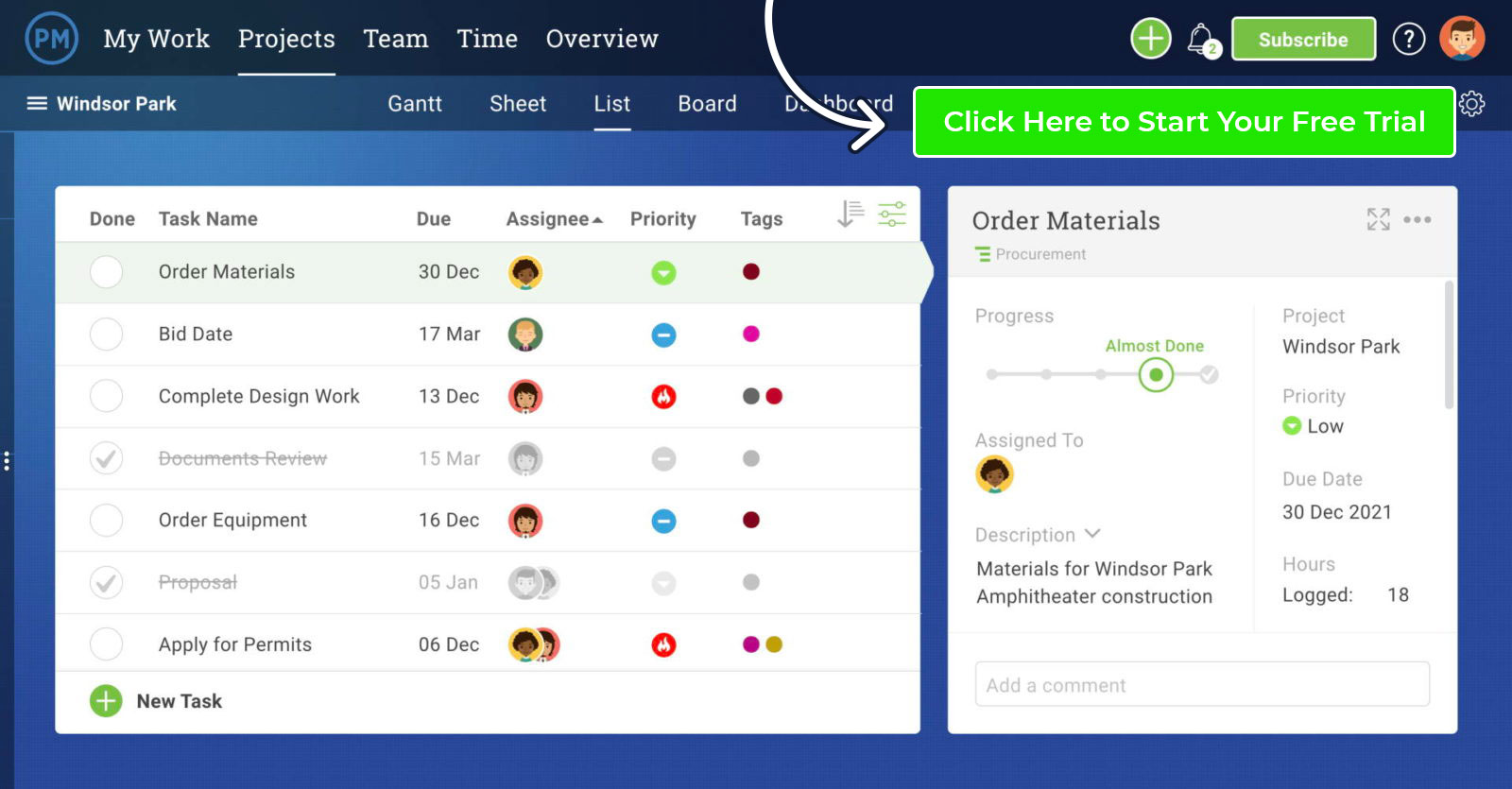
Managing a project is difficult. You have a deadlines to…Read More »
The post How to Manage Project Environment from Initiation to Close appeared first on ProjectManager.com.
http://dlvr.it/S9ZqmF

There you are. After months of preparation, you finally have the opportunity to pitch your big idea to a senior executive, an idea you believe is the organization’s next big thing. You rehearsed, memorized your script, and your PowerPoint is flawless. However, before you utter a word, the executive asks you two pointed questions, why […]
The post Conveying VALUE: A Proposed Framework to Inform Decisions appeared first on Project Management Articles, Webinars, Templates and Jobs.
http://dlvr.it/S9TGZZ

The pandemic has taught everyone that anything can happen, and change is always just around the corner. While every industry has been reeling from its impacts, the pandemic has given us the opportunity to make our project management offices more resilient and sustainable. To stay relevant and fulfil its role as a strategic command centre, […]
The post Evolving PMO: How the pandemic is shaping future PMOs appeared first on Project Management Articles, Webinars, Templates and Jobs.
http://dlvr.it/S9NqV4
Mukherjee and Roy indicate that many projects suffer from a lack of a feasibility study and that, “careful reviews of any proposal are essential before its design and development phase” (Mukherjee and Roy, 2017). The main objectives of a feasibility study are to evaluate the technical, operational, and economic utility of a proposal, and to ensure that the organization is basing decisions on accurate information, exact statements, and the latest financial records (Mukherjee and Roy, 2017). Read Jennifer Bridges’ post at the link below and return to comment on whether you utilize feasibility studies for your strategic projects.

Why is a feasibility study so important in project management?…Watch »
The post What Is a Feasibility Study? How to Conduct One for Your Project appeared first on ProjectManager.com.
http://dlvr.it/S99Z0P
Mukherjee, M., & Roy, S. (2017). Feasibility studies and important aspect of project management. International Journal of Advanced Engineering and Management, 2(4), 98-100.
This is a subject that has been discussed for some time, and I have seen various posts and articles focused on this question through-out my time as a project manager. In 2004, Schnauffer described a scenario in which a fictitious company sought to identify its core work and its high-performing employees. The process was impeded because, “the PMO Manager has used his own special review to appraise the performance of the Project Managers. This review is much different than the review from the Directors and it makes it difficult to compare the Project Managers performance with that of functional employees. There are suggestions to remove the entire PMO population because it can’t be ranked using the same criteria as the rest of the organization.” (Schnauffer, 2004). Others have suggested that the question should not be whether project management is dying, but rather is formal project management necessarily needed? Read Stacy O’Connor’s post at the link below, and then return and share your thoughts on how we can raise the profile of project management in organizations.
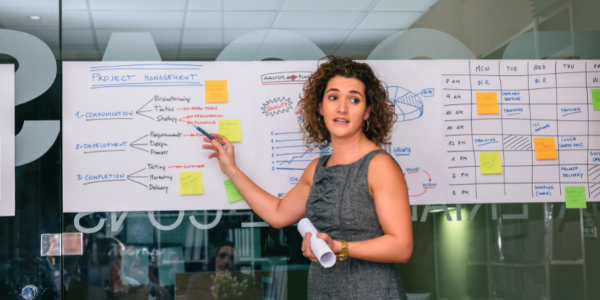
As Project Managers, most of us have experienced someone that works in our organisation slapping a on a PM badge and joining the party. This party is one with an endless bar tab, the end time doesn’t matter drinks are spilled over glossaries containing project buzz words and generic document templates found on Google. Only […]
The post Is Project Management Being Devalued By Non-Project Managers? appeared first on Project Management Articles, Webinars, Templates and Jobs.
http://dlvr.it/S92FvF
Schnauffer, B. (2004). The devaluation of project management – is there hope for the project manager? Paper presented at PMI® Global Congress 2004—North America, Anaheim, CA. Newtown Square, PA: Project Management Institute.

Being straight with yourself puts you on solid ground for getting what you want. And who doesn’t like to get what they want? Can you own up to your motivations and limitations, your values, and your intentions? Are you self-aware enough to acknowledge your capacity and capability and to own up to your strengths and weaknesses? Can you manage your emotions to be responsive rather than reactive? Are you clear about your values and intentions and how they motivate you?
Here is a little story about owning up to what you really want.
A person came to the Guru to get instruction on how to deal with an exploitive partner (it could be an abusive, uncooperative, or incompetent boss, subordinate, or peer).
Guru asks, “So you want to change your partner.”
“No, I want to change myself” the person answered.
Guru (who is a bit of a mind reader) says, “No. You only say that because you think wanting to change the other is not “spiritual,” not giving and allowing; that it is manipulative. You might have read somewhere that the only thing you can do is to change yourself and your perception, that you need to accept things as they are.”[more…]
The post Be Straight with Yourself to Get What You Want and Want What You Get appeared first on Project Management Articles, Webinars, Templates and Jobs.
http://dlvr.it/S8z90q
Read Marshall Simmons’ Blog post at the link below:

It can seem like magic. How do marketers conjure customers
to buy the product or service they’re selling? It’s not hocus pocus or smoke in mirrors. It is far less exciting than any of those side-show tricks.
To reach their target customers, marketers use content marketing tactics like blog posts, eBooks, case studies and social media. All of these channels are part of a content strategy that directs the content creation efforts you execute to meet the company’s marketing goals.
A content plan, on the other hand, is the blueprint that defines the assets and steps needed to implement your content strategy. Let’s learn more about the difference between a content plan and a content strategy.
A content plan defines all the marketing assets and content creation that you’ll need to implement your content strategy. That includes all the digital marketing channels and tools that you’ll need to create, publish and manage your content.
Some examples of marketing assets that could be part of your content plan are a content management system, social media platforms, search engine optimization (SEO) tools, analytics, blogs, white papers and other related items. You determine which marketing assets to use by analyzing your target audience.
There are many content channels that can be exploited in your content plan, but each must align with your branding.
Your content strategy also needs to integrate with your marketing funnel. A marketing funnel is generally broken up into four stages: awareness, consideration, conversion and decision. You can direct content to any of those stages, but always with the purpose of lead generation.
Whatever your content plan, as you develop and finalize it, it should be shared among the entire marketing department. Everyone on the team should be on the same page, know how the pieces of the content plan work together and how they relate to the overall content marketing initiative.
We’ve mentioned content strategy, but don’t confuse that with a content plan. The content strategy outlines your company’s content marketing goals and how to achieve them. It’s a high-level view of your content creation efforts, which guides the creation of your content plan….Read More »
The post How to Create a Content Plan and a Content Roadmap appeared first on ProjectManager.com.
http://dlvr.it/S8lfw1
 thin.KJ.et