Latest Entries »

The Guide to the Project Management Body of Knowledge states that Control Schedule, “is the process of monitoring the status of the project to update the project schedule and managing changes to the schedule baseline” (Project Management Institute, Inc., 2017). I’ve heard it referred to as “working the plan” and, it’s my belief that projects most often go wrong when implementation of the plan fails. Read Marshall Simmons post at the link below, then return and comment on your schedule control methods.

Project Management Institute, Inc. (2017). A guide to the project management body of knowledge.
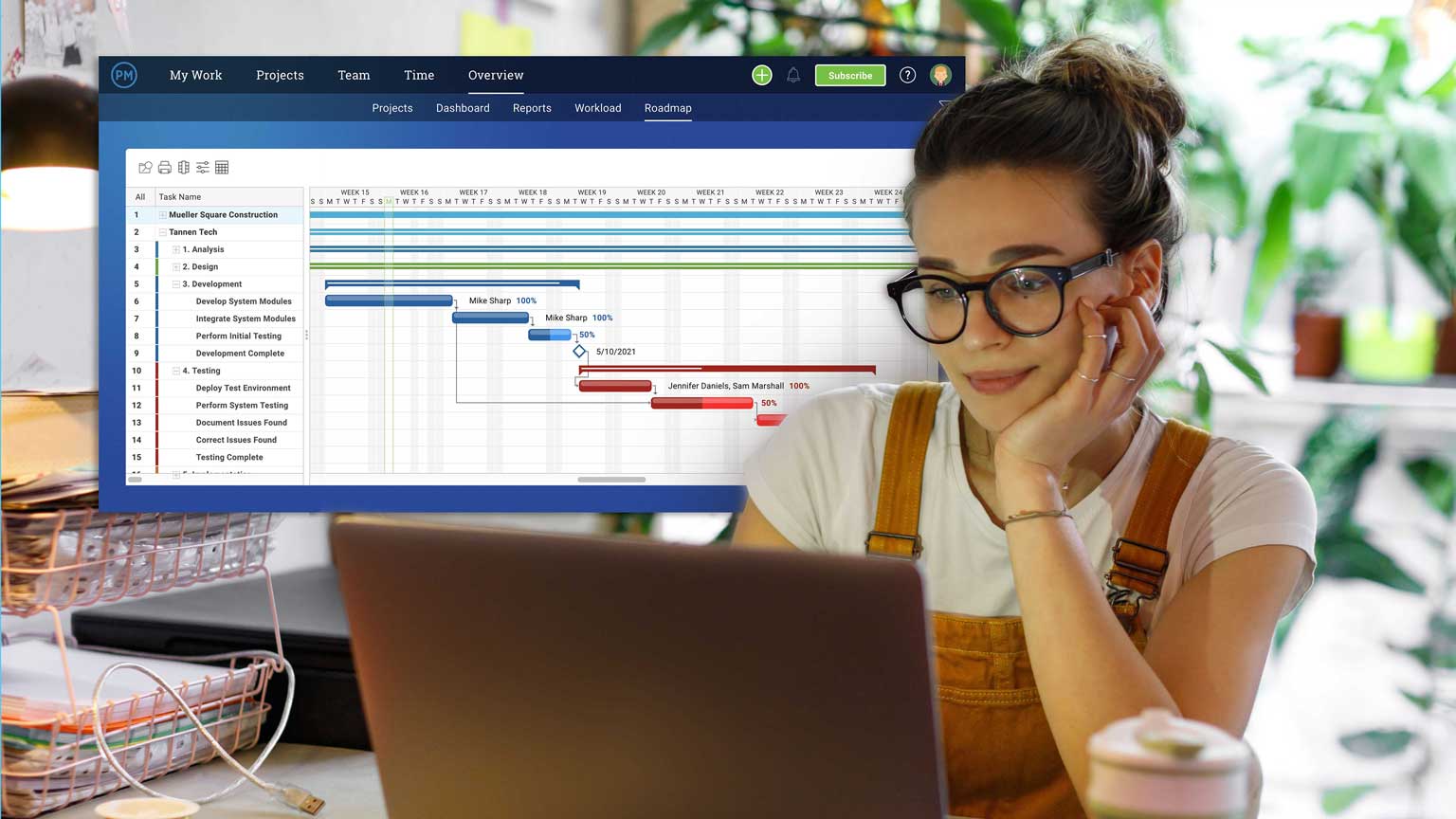
Projects are made up of many moving parts. One of the ways that you can determine if the project is behind or ahead of schedule is called schedule control.

Project planning, scheduling and control all go together when managing a project to stay on time and meet your deadlines. Learning what schedule control is and what you can do to best apply it can help you bring your next project in on-time and under budget.

What Is Schedule Control?

Schedule control is used in project management to monitor your activities and tasks to ensure you’re proceeding as planned. Of course, it’s more than just monitoring status. Project schedule control also means updating your project processes and managing change.

…Read More »

The post 5 Essential Tips for Schedule Control in Project Management appeared first on ProjectManager.com.
http://dlvr.it/S56Cwv

“I.T. was the best of times, I.T. was the worst of times, I.T. was the age of wisdom, I.T. was the age of foolishness, I.T. was the season of light, I.T. was the season of darkness, I.T. was the spring of hope, I.T. was the winter of despair…”  – Apologies to Charles Dickens.

The structured thought processes of the conventional information technology initiative make it most difficult to fathom the chaotic conditions under which some initiatives have been forced to exist and progress. Accounts follow of three real-world transformation initiatives observed in their respective environments, with subsequent analysis and introspection, however difficult, in the months and years following each initiative’s protracted imprisonment in its own Bastille. Perchance posterity can, from considering these telling accounts, be forewarned, find shared experience, be nourished by hope and so see their initiatives and organizations recalled to life.[…]

The post A Tale of Three Initiatives: Project Management Lessons from the French Revolution appeared first on Project Management Articles, Webinars, Templates and Jobs.
http://dlvr.it/S520Z2

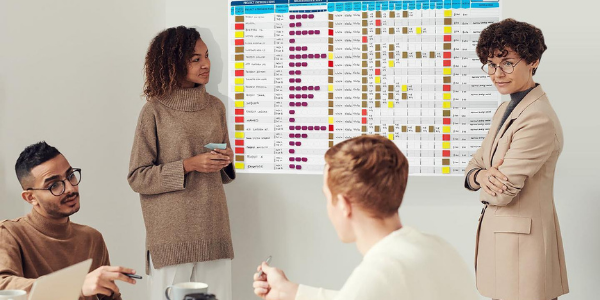
1. The most comprehensive and complete Portfolio Board Kit that captures up to 20 projects & programs on it! Special design Portfolio Board provides a complete overview of a large portfolio up to 20 projects and programs. You can easily sense overall status of each project on the board from 10 feet and in 3 […]

The post 5 Reasons to Consider pmxboard Portfolio Management Board Set for your professional and private life appeared first on Project Management Articles, Webinars, Templates and Jobs.
http://dlvr.it/S520Yr

Strategic management is a topic that sounds very impressive.  It conjures images of cross-functional teams dressed in business attire gathered around a table – or maybe facing a whiteboard – analyzing data and applying models in order to make decisions for the company with millions of dollars riding on the outcome.  Many of us who […]

The post Strategic Management Demystified – A better approach to strategic management and how you already know how to use it appeared first on Project Management Articles, Webinars, Templates and Jobs.
http://dlvr.it/S520Vm

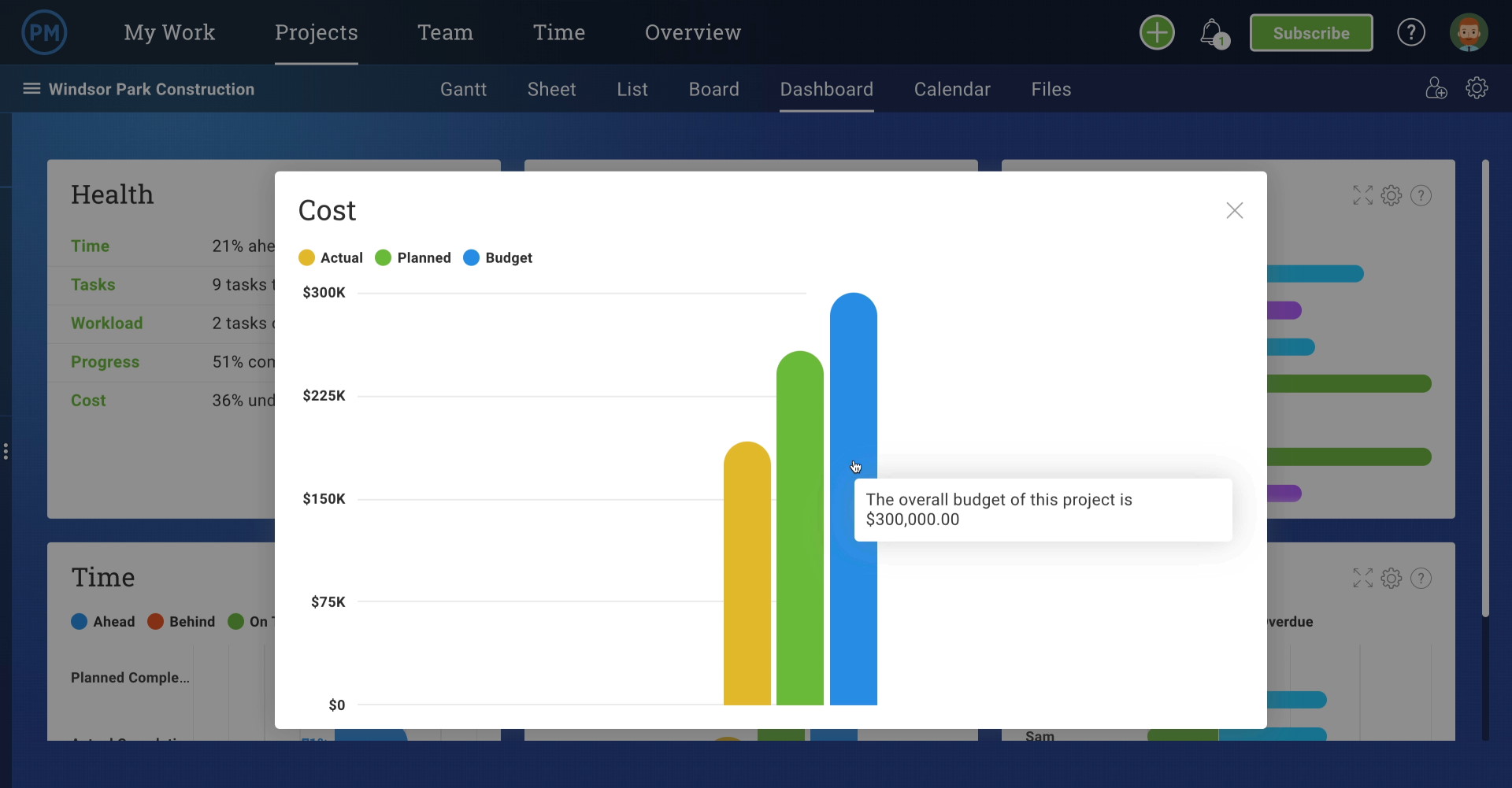
Reichel states that the formula to calculate cost variance (CV = EV – AC) is sometimes “expressed as the difference between budgeted cost of work performed and actual cost work performed. If the variance is equal to 0, the project is on budget. If a negative variance is determined, the project is over budget and if the variance is positive the project is under budget” (Reichel, 2006).  Cost variance is a critical factor in earned value management, and Quincy Yarbrough goes into a detailed analysis in the article below.  Follow the link below to read Yarborough’s article, and then return and leave your impressions in the comment section:

Cost variance pane on the Project Dashboard in ProjectManager

Throughout the life of a project, project managers check in on progress and compare it to the project plan—comparing their predictions to reality. If they don’t do this regularly, odds are the budget will suffer and their project will fail entirely. Luckily, these deviances from the plan, such as cost variance, don’t have to sink a project.

In fact, they can actually strengthen it. The key is spotting them and making adjustments to stay on the right path. One of the best ways to avoid cost overrun is by calculating cost variance.

Understanding Project Costs

All projects cost money, regardless of their size, scope or deliverables. We’ve all heard “there’s no such thing as a free lunch”. The same goes for projects – there’s no such thing as a project without costs. These costs come in many different forms, from the cost of materials to simply the cost of doing business (rent, salaries, etc.). It’s the project manager’s job to take all of these costs into account and create a flexible budget.

…Read More »

The post How to Calculate Cost Variance for a Project (Formula Included) appeared first on ProjectManager.com.
http://dlvr.it/S4grZB

Reichel, C. W. (2006). Earned value management systems (EVMS): “you too can do earned value management” Paper presented at PMI® Global Congress 2006—North America, Seattle, WA. Newtown Square, PA: Project Management Institute.

While this post by Megan Keup touts projectmanager.com’s own solution as an alternative to MS Project, my Team evaluated Proofhub as the best choice.  I’ve also used Wrike in the past, and it has proven to be an effective project management tool.

Read the post at the link below, and then return and leave a comment regarding the most effective alternative for MS Project that you’ve discovered:

As projects grow in complexity and workforces expand globally, the need for online project management tools is no luxury. There is no lack of products to choose from, with varying degrees of usefulness. Microsoft has thrown its considerable weight into the ring with Microsoft Project. While MS Project has become an industry-standard in project management, it comes with problems, leaving people to search for the best Microsoft Project alternative.

Why People Seek a Microsoft Project Alternative

Microsoft Project can do much of what you need when managing a project, but it’s not a perfect tool. There are many reasons why people who use it are searching for an MS Project alternative. Thankfully, there are many other software solutions on the market that offer users a great alternative to Microsoft Project. We’ll get to those in a moment, but first, let’s outline the reasons people are dissatisfied with MS Project.

  • Steep Learning Curve: Microsoft Project is not for beginners. The software is very technical and not user-friendly. That might be fine if you have an advanced degree in project management, but for the rest of us it’s going to require a lot of work, time and training to get a handle on how to use the tool. If you struggle with project management software, your project struggles too.
  • Poor Team Communication: Microsoft Project falls short in this category. You can’t easily message your team in the app, which means you’re going to have to jump onto one of the messaging tools that Microsoft offers, such as Teams, Outlook or Skype. Why do you want an add-on when it’s so much more efficient to have your communication tool embedded in the software?
  • Lack of Integration: While MS Project works okay with other Microsoft products, that’s not the case if you want to use a tool outside of the Microsoft family of apps. So, if you’re looking to integrate with Salesforce, Slack or other tools, you’re probably going to find yourself frustrated and looking for an MS Project alternative.
  • High Price: If money is your bottom line, then Microsoft Project’s price tag will be a tough pill to swallow. What makes matters worse is that you have to pay for each license. You may have to selectively license MS Project to your team. Some will get to use it, others won’t, which is going to block collaboration and slow down progress on your project.
  • Hard to Share Data: It’s almost as if Microsoft Project doesn’t want your team to work together. If anyone on your team works on an Apple product, they’re out of luck. It’s such a problem that a cottage industry of online tools has emerged that offer ways to take MPP files, convert them into friendlier formats to edit and share, then convert them back to MS Project files. That’s not very efficient!

…Read More »

The post Best MS Project Alternatives 2021 for Project Managers appeared first on ProjectManager.com.
http://dlvr.it/S4DVMb

Stenbeck writes that, “among all the stressful facets of project management, none evokes the fear, the sense of foreboding, and the absolute dread that comes from needing to provide estimates for some requirements that are, quite simply, unknown or unknowable” (Stenbeck, 2008).  Indeed, we’ve all heard the mantra, “don’t worry about the things you can’t control”.  But, what happens when you need to put a cost on those things?  Estimating can be a complex process, particularly if confronted with the task of top-down or bottom-up estimating a project with a plethora of unknowns.  Early on in my career, I was fairly successful utilizing historical estimates as a majority of the projects I was working on were, for the most part, monolithic and uniform. Lately, I’ve been faced with a wider variety of projects, and I’ve had to rely on other tools.


Read the following by Quincy Yarbrough regarding Level of Effort (LOE) at the link below, and then return to comment on the topic.


Level of effort (LOE) is a project management term that refers to a specific type of project activity called support activities. Support activities do not yield deliverables, but rather fuel tasks that do. Therefore, the level of effort is how much work these tasks will take to complete.

This work can take many forms, such as updating project documents, maintaining equipment, submitting expenses, etc. The unifying characteristic of this work is that it must be done regularly to support a greater task.

Level of Effort Examples

The best way to understand level of effort is by looking at common support activities that take place in almost any project. We’ve a few level of effort examples below.

Managing Stakeholders

Stakeholder management is the art of creating strong relationships between everyone involved in a project. Good stakeholder management requires constant communication and transparency. Depending on the scope and size of the project, the level of effort for stakeholder management activities will go up and down, and it is important to be aware of how much energy it will take. Stakeholder management includes sending regular updates, scheduling meetings, hosting calls, creating documents, etc.

…Read More »

The post What is Level of Effort (LOE)? Plus, 5 Tips for Effort Estimation appeared first on ProjectManager.com.
http://dlvr.it/S49TXj

Stenbeck, J. (2008). Five keys to estimating. Paper presented at PMI® Global Congress 2008—North America, Denver, CO. Newtown Square, PA: Project Management Institute.

Read Quincy Yarbrough’s post: Projects, no matter the size and scope, are complex. If they weren’t, they might as well just be tasks on a to-do list. Luckily, projects are also a group effort—for every project, there is a project team working together to make deliverables a reality.

How do these teams come together? Not on their own! There are many ways to form project teams and many factors to take into account.

What Is a Project Team?

A project team is composed of individuals that are working together towards a common goal. This can include executives, a project manager, team leaders from different departments and team members. How this team operates depends on how it’s organized, which can take the form of different project organizational structures.

Within a typical project team structure, projects are headed by the project manager, though they also can be led by an executive that the project manager reports to. The key characteristic of this type of team is that everyone reports to the project manager or another individual at the top of the chain of command.

The project manager often manages the project, the team and all the related tasks in a project management software. Ideally, project management software allows for team collaboration as well as planning, so teams can be at there best, like with ProjectManager.

…Read More »

The post How to Assemble a Project Team appeared first on ProjectManager.com.
http://dlvr.it/S3p8BS

Megan Keup writes about the best resource management software of 2021: Resources in project management are the people, places and things you need to get the job done. This includes the project team, the tools they need, materials, facilities and so on. That can mean a lot of headaches for project managers trying to balance their resources with the team’s capacity. And, of course, all this is happening on a tight schedule and budget.

You can see the need for resource management software, which includes planning and proper allocation of those resources to make sure teams have what they need when they need it. It’s through resource management that projects keep to their budgets and stay on schedule.

Before we look at a number of tools that claim to be the best resource management software, let’s define resource management in-depth. Then we’ll get to the best resource management software rankings of 2021.

What Is Resource Management?

Resource management is all about getting the materials, supplies, equipment and people you need to execute a project. It involves how you plan, schedule, allocate and manage those resources to best serve the project.

Making sure your resources are used effectively is the backbone of resource management, whether those resources come internally or externally. That means working with vendors, subcontractors and your own teams, coordinating their work and making sure that resources are always balanced with capacity to keep productivity high.

Clearly, resource management is important for many reasons. Using too many resources can be costly and using too few can slow down production. You’ll either overspend or miss your deadlines. Neither option is advisable. Fortunately, resource management software can help.

…Read More »

The post Best Resource Management Software of 2021 appeared first on ProjectManager.com.
http://dlvr.it/S3ncM2

I’m sure you’ve done it too: pulled out the calendar, circled the project due date, and worked backward from there. Read Quincy Yarbrough’s article about mastering the Workback Schedule, and then work your way back to this post to comment on your workback methodology…

Have you ever gotten stuck trying to schedule a project? If you’re like most of us, the answer is yes. It’s the project management equivalent of writer’s block, and it can majorly slow down your planning.

The good news is, there is no shortage of methods designed for tricky scheduling situations—whether it’s a lack of information, inspiration or anything else. One such solution is the workback schedule.

What Is a Workback Schedule?

A workback schedule is a method of scheduling in which the planner assigns resources to tasks in reverse order, starting from the last task and going to the first. This is best executed with the help of project scheduling software.

…Read More »

The post Mastering the Workback Schedule: 5 Essential Tips appeared first on ProjectManager.com.
http://dlvr.it/S3ktxc