Latest Entries »

In CIO Insight’s most recent digital publication, author Shelby Hiter considers the impact that the COVID-19 pandemic has had on agile project management.  Specifically, Hiter cites such changes as Virtual Meetings over onsite visits, stronger data management practices, growing involvement in change management, and moving agile practices beyond the software world and into other areas of project management as major impacts (Hiter, 2021).  I can attest to experiencing all of these shifts in routine operation; the result of emergency measures undertaken industry-wide through-out the healthcare space.  The transformation to virtual meetings has been particularly impactful, leading to more meetings scheduled back-to-back as physical conveyance from one meeting room to another has been reduced or eliminated.  In fact, as we begin the shift back to a more in-person approach, we have found the need to adjust our thinking in terms of scheduling meetings to accommodate getting from one area of the hospital to another.

Read Hiter’s article here, and then return and comment on how the pandemic has altered your approach to agile project management.

Hiter, S. (2021, July 2). COVID’s Impact on Agile Project Management. CIO Insight. https://www.cioinsight.com/collaboration/agile-project-management/.


The Guide to the Project Management Body of Knowledge states, “Plan Communications Management is the process of developing an appropriate approach and plan for project communications activities based on the information needs of each stakeholder or group, available organizational assets, and the needs of the project. The key benefit of this process is a documented approach to effectively and efficiently engage stakeholders by presenting relevant information in a timely manner” (Project Management Institute. 2017).  Communication in a project needs to be efficient and effective, thus requiring proper planning.  See Quincy Yarborough’s post at the link below and comment with your most effective communication strategies and how you have imbedded them in a proper project plan.

Project Management Institute. (2017). A guide to the project management body of knowledge. Project Management Institute, Inc.


All projects require communication between stakeholders. This seems simple enough, but sharing information with everyone clearly and consistently requires a plan. Without one, things become messy and stakeholders can become confused and unhappy.

That’s where communication planning comes into play.

What Is Communication Planning?

Communication planning is the process of laying out how communication will take place between team members and stakeholders, whether it be on a project, in an organization or both. In other words, managers use a communication plan to create a formal process for sharing information.

This includes creating systems of communication and an order of operations to follow. This can sound dry, but it is ultimately a creative process and should be treated as such.

…Read More »

The post Communications Planning: A Quick Guide appeared first on ProjectManager.com.
http://dlvr.it/S3GcYj

The project management team for a grant that I worked on vetted many of the solutions offered in the article linked below.  We settled on ProofHub as our task management solution of choice.  Read the article at the jump below and leave a reply as to which solutions have worked for your Team and why.

Task management is essential to project management, teamwork and simply getting work done. Productivity is lost if a team loses control of their tasks and deadlines. Teams use task management software to execute tasks on time, within budget and with the right resources. But there are a lot of task management software solutions to choose from, and it can be hard to know which is the best.

We took the time to look over the pack, and we picked out those with extraordinary features deserving of your attention. But before we rank the best task management software, let’s make sure we understand task management.

…Read More »

The post Best Task Management Software of 2021 for Teams appeared first on ProjectManager.com.
http://dlvr.it/S2xnN4

Every project is made up of tasks, and the sequence

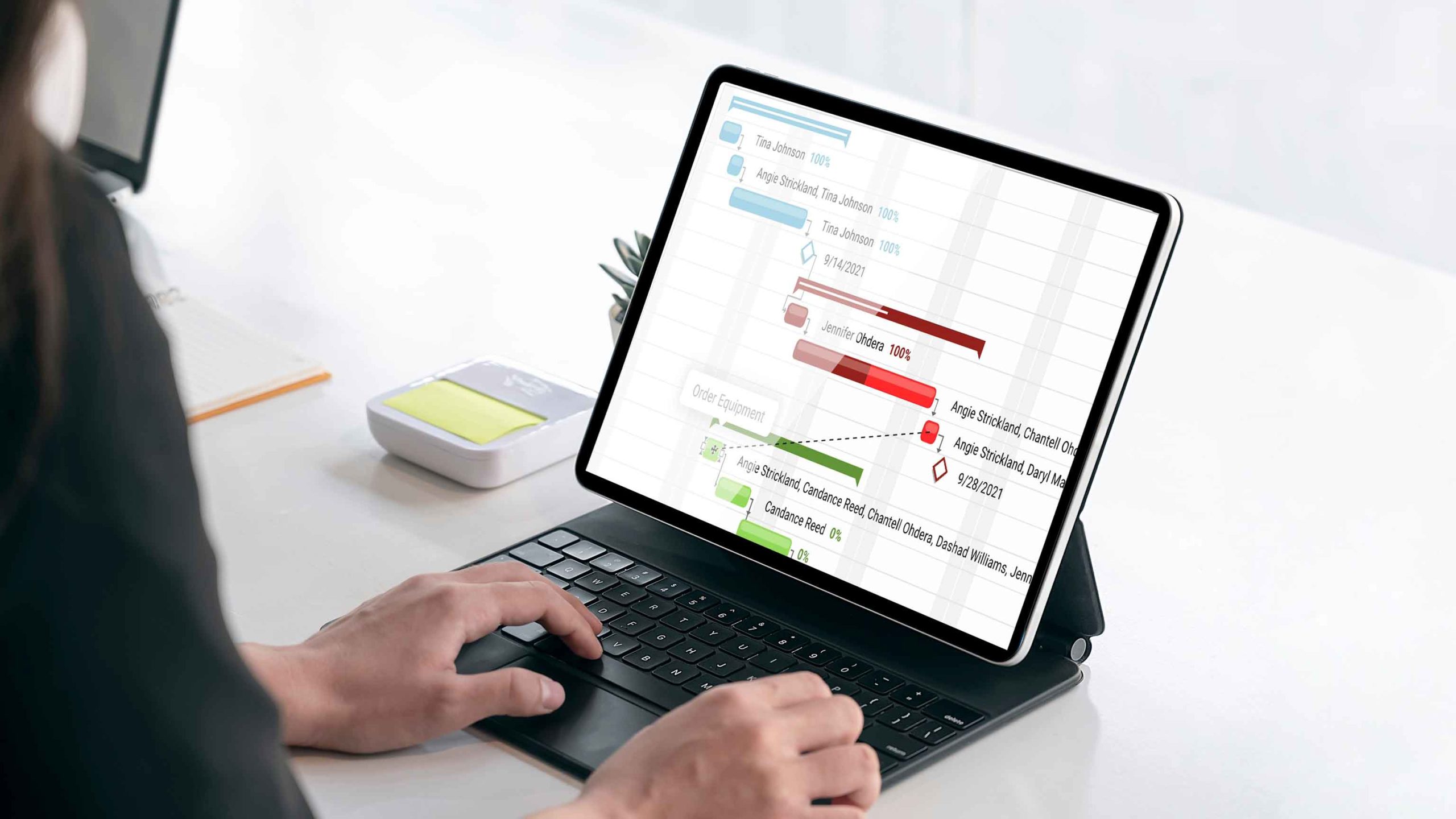
of those tasks are often of the upmost importance. Certain tasks can’t begin until another one has finished, and vice-versa. In order to ensure that tasks are done in the correct order, project managers employ the use of Gantt charts and Gantt chart software to track the dependencies between their project’s tasks.

In order to talk about Gantt chart dependencies, though, we must first talk about Gantt charts.

What Is a Gantt Chart?

Gantt charts are a well-known project management chart. Gantt charts are visual tools created during the project planning phase and are used to show a wide range of project data as simply as possible with horizontal bars.

This horizontal bar chart is the easiest way to see how projects are scheduled over time. This includes which tasks must be completed, how long those tasks should take, who is responsible for which tasks, etc. Gantt charts also allow you to create and view milestones. …Read More »

The post Gantt Chart Dependencies: Understanding Task Dependency Types appeared first on ProjectManager.com.
http://dlvr.it/S2szGz

The construction project manager role is a unique position, though

 it shares many of the attributes associated with any kind of project manager. A construction project manager job description seeks a candidate who can plan and oversee a construction project from initiation to close with the help of software, resources and a reasonable budget.

If you’re looking for an experienced construction project manager, you need to understand their job. The better you understand the position, the more qualified your candidates, and the better the construction project will be.

What Does a Construction Project Manager Do?

A construction project manager’s responsibilities involve a number of critical activities. These activities include:

Of course, the duties on a construction project manager job description should extend beyond this list. …Read More »

The post Construction Project Manager Job Description (with Free Example!) appeared first on ProjectManager.com.
http://dlvr.it/S2p34P

You can’t understand Trello, or properly evaluate Trello alternatives, without understanding the kanban board. The kanban board is easily one of the most popular task management tools available ffor project managers. If you’ve used one, it’s not hard to see why they’re an important part of project management software.

What Is a Kanban Board?

Kanban boards are visual tools that keep teams flexible, productive and focused on continuous delivery. It’s a more efficient way to manage workflow and team collaboration. Given its diversity and simplicity, it’s understandable that so many software solutions are incorporating kanban.

Trello, the Most Popular Kanban Software

Perhaps the most popular kanban software is Trello, which implements the kanban board tool as a means for teams to manage simple tasks. Trello is a task management software that uses the visual overview of kanban to manage projects.

…Read More »

The post Best Trello Alternatives of 2021 for Kanban Projects appeared first on ProjectManager.com.
http://dlvr.it/S2Q6Yc

Before you’re able to do a project risk analysis, you have to acknowledge that risk is going to happen in your project and you’ll need to be prepared with a risk management plan. By planning for risks, you begin the process of knowing how to identify, monitor and close out risks when they show up in your project.

Part of that risk management process is risk analysis. It’s a project planning technique that helps you to mitigate risk. There are also tools that can assist. You should at the very least, have a risk tracking software tool to identify and list those risks.

…Watch »

The post Risk Analysis 101: How to Analyze Project Risk appeared first on ProjectManager.com.
http://dlvr.it/S2PnB2

Even the most meticulously planned projects experience unforeseen changes, and

when this happens, we need to quantify the effect these changes have. Luckily, there are formulas that eliminate the guesswork.

One of these formulas solves for Estimate at Completion — an important metric for monitoring a project budget. Keep reading to learn why to always calculate Estimate at Completion and exactly what this formula can do.

What is Estimate at Completion (EAC)?

Estimate at completion is a part of the earned value management (EVM) system. This term refers to the practice of estimating a project budget during the project’s life. In other words, how much will the project cost at the time of completion? Your EAC can then be compared to the originally projected budget.

…Read More »

The post Calculating Estimate at Completion (EAC) appeared first on ProjectManager.com.
http://dlvr.it/S2PLM5

In Earned Value Project Management Method and Extensions, Anbari states that, in a project, “the schedule variance (SV) is a measure of the conformance of actual progress to the schedule: SV = EV – PV” (Anbari, 2003).  Read more about the SPI at the link below:

If someone asked how much value you get from a day of work, what would you say? Odds are, you’d give one of the customary responses — a fair amount of value, not much value, a lot of value, etc. Unfortunately, these answers aren’t helpful and aren’t valuable to projects.

The schedule performance index was created to eliminate the guesswork and give a specific, quantifiable answer to the question, as well as show where improvements need to be made for maximum efficiency.

What Is the Schedule Performance Index?

Schedule performance index (SPI) is part of a greater project performance measurement method called earned value management (EVM). The SPI itself is a ratio of earned value to planned (or actual) value. Depending on the integer, SPI reflects a project being on schedule, behind schedule or ahead of schedule.

…Read More »

Anbari, F. T. (2003). Earned value project management method and extensions. Project Management Journal, 34(4), 12–23

The post Schedule Performance Index (SPI): An Introduction appeared first on ProjectManager.com.
http://dlvr.it/S2KTn8

Matthews states that, “good project scheduling methodology is essential to control and ultimately to a company’s competitive advantage and profitability. For this reason, the project schedule has long been emphasized as a key tool in the management of a project’s resources” (Matthews, 1994).  Read some great tips for effective resource scheduling at the link below: 


What are resources? They’re everything you need for a project. That includes people, places and things.

In other words, resources are essential. Dealing with them and coordinating their use is one of the main hurdles that project managers have to clear if they’re going to cross that project finish line.

Resources will plug into every phase of your project. They’re part of the planning, scheduling and executing of the project. A sound methodology is required in order to have the resources you need when you need them. You know where this is going. Yes, resource scheduling.

It’s hard to pinpoint the most important aspect of project management. Everything feels essential. But there are definitely some pillars that hold up the project and carry more weight than others. Resource scheduling is one. We have a few tips that will help you manage your resources better.

Matthews, M. D. (1994). Resource scheduling: incorporating capacity into schedule construction. Project Management Journal, 25(2), 44–54.


….Read More »

The post 7 Tips for Better Resource Scheduling appeared first on ProjectManager.com.
http://dlvr.it/S2JwFq